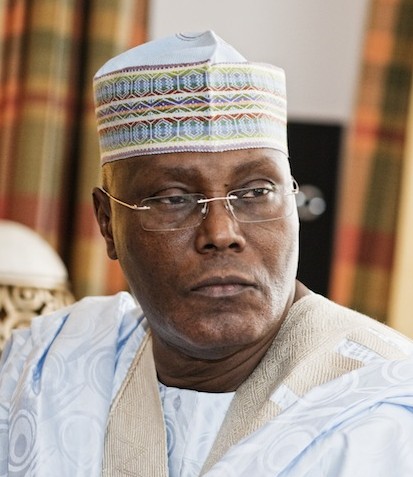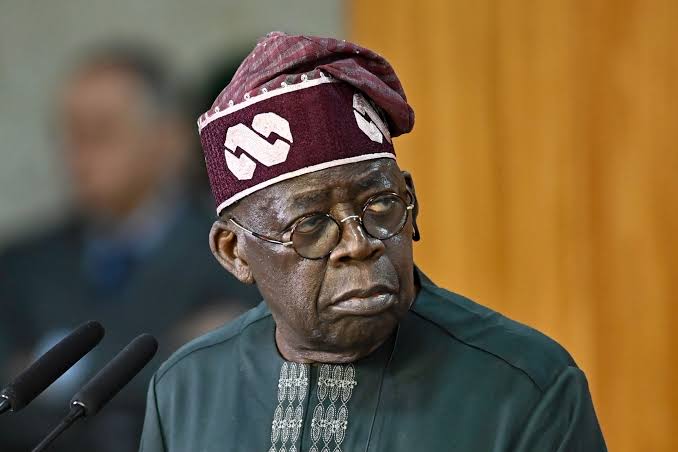
Former Vice President Atiku Abubakar and the Nigerian Democratic Congress have criticised the Federal Government’s proposed 90-day cost-of-living relief programme, describing it as a politically motivated initiative aimed at winning public support ahead of the presidential election rather than providing lasting solutions to Nigeria’s economic challenges.
The opposition figures argued that the programme, which is expected to extend beyond the election period, amounts to an attempt by President Bola Tinubu’s administration to pacify Nigerians after years of rising living costs and economic hardship.
Speaking at a world press conference at the African Democratic Congress (ADC) Secretariat in Abuja yesterday, Phrank Shaibu, Director of Strategic Communication of the ADC Presidential Campaign Council, questioned the timing of the initiative, noting that the proposed 90-day implementation period exceeds the time remaining before Nigerians head to the polls.
“The presidential election is 86 days away. Yet President Bola Tinubu’s National Economic Council has announced a cost-of-living plan that will run for 90 days.
“The arithmetic is plain: the plan ends after Nigerians have voted. After three and a half years of hardship, this government is asking families to carry another promise into the polling booth and wait for relief until the votes are counted.
“This is election bait. Tinubu is offering hungry Nigerians the promise of affordable food, but the promised relief comes with a deadline that outlasts the election. The message is simple: vote first; relief later. Nigerians should refuse the bait and judge this government by the three and a half years they have already lived through,” Shaibu said.
The proposed intervention was developed by the Federal Ministry of Finance and endorsed on Thursday at the 161st meeting of the National Economic Council, which Vice President Kashim Shettima chaired virtually. Its five major areas of focus are food affordability, tax harmonisation, the completion of critical projects, the removal of investment barriers and support for households.
Shaibu maintained that the priorities outlined by the government reflected longstanding concerns that Nigerians had expected the Tinubu administration to address since assuming office. He argued that the announcement offered little assurance that households and businesses would experience meaningful improvements in their economic circumstances.
“Families have cut meals. Workers spend more of their wages getting to work. Manufacturers struggle to produce, and businesses have closed. Tinubu cannot erase three and a half years of hardship with a 90-day announcement.
“When he removed the petrol subsidy, the impact on transport, food and production costs was predictable. Protection for vulnerable households should have come alongside that decision. Instead, the government imposed the costs immediately and left Nigerians to wait for the benefits. Now, after years of hardship, it has suddenly discovered that people need affordable food.
“A government cannot put a 90-day deadline on hunger, the cost-of-living crisis and insecurity and call it an economic policy,” he said.
The NDC also condemned the initiative, with its National Publicity Secretary, Osa Director, arguing that the administration had resorted to emergency measures to regain public confidence after its economic decisions created widespread uncertainty.
Speaking in an interview with LEADERSHIP, Director said: “It is visible to the blind and audible to the deaf that the amorphous economic policies of the Tinubu-led administration have failed.
“They have now resorted to desperate measures to placate the people. But unfortunately for them, Nigerians are wiser and can see through the smokescreen.”
Beyond the economic relief programme, Shaibu questioned Tinubu’s planned visit to Kaduna to launch his re-election campaign, citing several tragedies that have affected communities in the state during the President’s tenure.
He recalled that an Army drone strike hit civilians attending a Maulud celebration in Tudun Biri on December 3, 2023, killing at least 85 people. According to him, Tinubu delegated the responsibility of visiting survivors to his Vice President rather than personally meeting families mourning their relatives.
Shaibu also referred to reports of a military airstrike in Giwa in September 2024 that allegedly killed at least 24 civilians. He further cited the experiences of families in Kajuru affected by banditry, abductions and the search for missing relatives.
He said an attack involving kidnapping in Kachia in September 2025 affected 152 people, with eight deaths and nine injuries recorded.
The ADC campaign spokesman also highlighted the effects of severe weather events in Kaduna, stating that windstorms and rainfall in July 2025 affected 6,172 people and damaged hundreds of shelters across five local government areas. He added that flooding in Zaria in September affected 476 people and left dozens injured.
Shaibu questioned what he described as the President’s absence during periods of grief and destruction, contrasting the circumstances surrounding those incidents with the planned campaign launch.
“When families were burying their dead, searching for their children and clearing wreckage from their homes, Kaduna needed the attention of its President. Yet the Presidency’s account of Tinubu’s September 2025 visit listed a wedding and a courtesy call. Now, with an election approaching, he is returning to launch a campaign.
“Tinubu can find his way to Kaduna for a wedding. He can find his way there for votes. Why was he absent when grieving families needed their President?
“He must not turn those families into a backdrop for a campaign celebration. Before asking Kaduna for another mandate, he should explain what has been done for the victims of Tudun Biri, what became of investigations into civilian deaths and how his government will protect communities still threatened by abduction,” he said.
The ADC spokesman further questioned the effectiveness of the Nigerian National Petroleum Company Limited’s (NNPC) petrol discount initiative, which commenced on October 1 and was subsequently presented by the government as part of its efforts to ease the financial burden on motorists.
Shaibu said his personal experience at NNPC Retail stations raised doubts about whether consumers were benefiting from the advertised price reduction. He claimed that attendants told him the discount was unavailable and that he purchased petrol at ₦1,405 per litre.
“With barely a week left before the offer expires, my experience as a customer was simple: a promise of relief, and a higher price at the pump. If NNPC says motorists can access a discount through an app, it must explain why customers arriving at its stations were told there was none. How many customers received the discount? At which stations? How many litres were sold at the reduced price? Publish the figures.
“NNPC has about 900 retail stations in a country where Nigerians buy petrol from thousands of outlets. What reach can a ₦66-per-litre promotion have when it is confined to that network? And what lasting relief does ₦66 offer families whose transport and food bills remain high?
“Tinubu announces relief at a podium. Nigerians arrive at the pump and pay more. Now his government expects the country to trust another announcement, this time with a 90-day deadline,” he said.
Shaibu linked the timing of the government’s intervention to Atiku Abubakar’s campaign message, which has emphasised the rising cost of living and the need to make Nigeria more affordable for ordinary citizens.
He argued that the administration’s latest announcement appeared to mirror concerns already central to the former vice president’s political agenda, warning Nigerians against accepting temporary assurances in place of measurable economic improvements.
“Tinubu’s government is trying to appropriate that message with a plan that runs through the election. Nigerians should not trade three and a half years of lived hardship for three months of promises,” Shaibu said.
The ADC Presidential Campaign Council also challenged the Federal Government to provide detailed explanations of how it intends to implement the five components of the relief programme, insisting that the announcement must be backed by specific targets, transparent funding arrangements and measurable outcomes.
On food affordability, the campaign demanded clarification on the measures planned to reduce expenses for farmers, transporters and traders. It also asked the government to specify when consumers should expect lower market prices and how affordability would be sustained beyond the programme’s 90-day duration.
Regarding tax harmonisation, Shaibu called for the publication of a comprehensive schedule identifying the taxes and levies to be abolished, consolidated or adjusted. He also sought assurances that promised reductions would not be followed by additional charges after the election.
On infrastructure, the campaign questioned which critical projects the administration expected to complete within the proposed period. It demanded details of their locations, outstanding financial obligations and anticipated dates of public use, arguing that completion should be determined by whether projects serve their intended beneficiaries rather than by government records.
The campaign also called on the government to identify the investment barriers it intends to remove within 90 days. Shaibu said manufacturers and other businesses needed dependable electricity, affordable transportation and access to reasonably priced financing to expand operations, employ more workers and restore struggling enterprises.
For the household support component, the ADC demanded the publication of eligibility requirements, the amount beneficiaries would receive, the commencement date for payments, the total budget and the mechanism for distributing the funds. It also sought clarification on what would happen to beneficiaries once the 90-day period expires.
Shaibu separately raised concerns about a registration form reportedly being circulated under the name “Arise for Tinubu 2027”, which he said requests voters’ identification details, bank information and telephone numbers.
He questioned the identity of those collecting the information, the intended use of the data and whether the exercise had any connection to the government’s proposed household assistance programme.
“Who is collecting this sensitive personal information, how will it be used, and is the exercise connected to the household support the government has announced?
“No Nigerian should have to hand over voter or bank details to a political group to receive public relief. The government must state clearly whether this registration exercise is connected to any publicly funded programme. If it is not, it must explain how it will prevent household support from being used to recruit voters or collect their data,” he said.
The ADC campaign spokesman maintained that Nigerians who have endured the consequences of the government’s economic reforms were entitled to demand clear evidence that the promised benefits would reach them and remain available after the election.
He argued that public resistance to economic reforms often stems from the absence of tangible benefits rather than a failure to understand the policies, adding that citizens should not be expected to continue making sacrifices without assurances of meaningful improvements.
“People do not reject reform because they fail to understand it. They reject being told to sacrifice today for relief that never arrives — or arrives with an expiry date.
“Atiku Abubakar has pledged to make Nigeria affordable again through disciplined public spending, targeted relief for households, lower costs of producing and moving essential goods, and an economy where Nigerian manufacturers can expand and employ more people. Economic policy should be judged by what families can afford, not by how many deadlines a government announces.
“Tinubu must answer two questions: Are Nigerians better off than they were in May 2023? And will they still be able to afford food on day 91 of his plan?
“Until he can answer both, Nigerians have every reason to see this 90-day exercise for what it is: a political timetable dressed up as economic relief.
“President Tinubu made life expensive. Atiku Abubakar will make life affordable again.”