




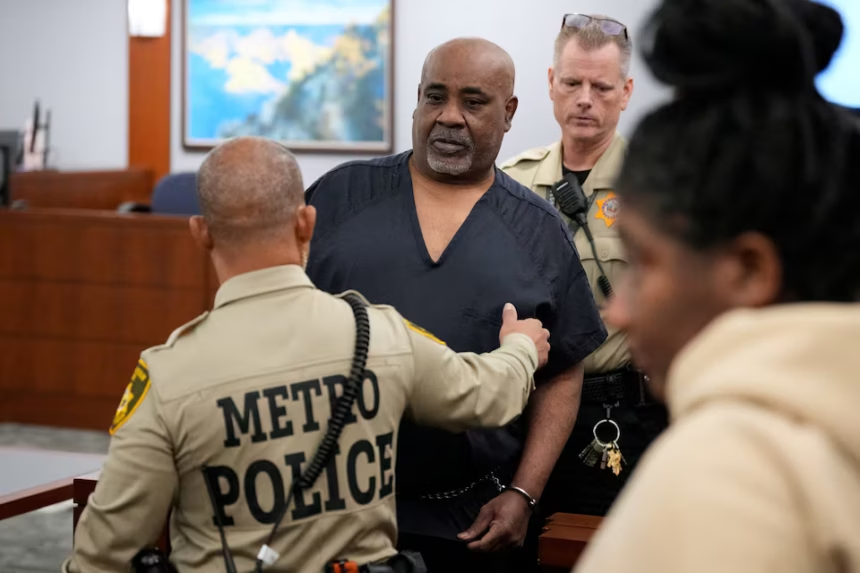
Duane “Keffe D” Davis has been sentenced to 40 years to life in prison for orchestrating the 1996 murder of legendary American rapper Tupac Shakur. This brings a major development in the decades-old case, with the world closely observing the Tupac Shakur murder sentence outcome.
According to CNN, the 63-year-old former gang leader received the sentence on Tuesday, October 13, in a Las Vegas courtroom. He was credited with 731 days for time already served.
Davis was convicted on August 31, 2026, of first-degree murder for his role in planning the fatal shooting of Shakur. The Tupac Shakur murder sentence is seen as a turning point in a case that long remained unsolved. The rapper died at the age of 25.
He remains the only person ever charged and convicted in connection with the rapper’s murder.
Judge delivers sentence 30 years after killing
Clark County District Court Judge Carli Kierny handed down the sentence following arguments from prosecutors and the defence. The Tupac Shakur murder sentence handed down by Judge Kierny drew widespread media attention.
Addressing Davis, the judge rejected suggestions that his personal transformation over the years should excuse his involvement in the killing.
“You don’t get to take a man from his family,” Kierny said.
“The world never forgot about him,” she added.
Prosecutors maintained that Davis orchestrated the attack in retaliation for an earlier confrontation involving Shakur and his entourage.
The confrontation occurred at the MGM Grand Hotel in Las Vegas, where Davis’ nephew, Orlando Anderson, was reportedly assaulted.
Hours later, Shakur was travelling in a BMW with Death Row Records co-founder Marion “Suge” Knight. That was when gunmen opened fire from a passing Cadillac.
The rapper sustained multiple gunshot wounds on September 7, 1996, and died six days later. Notably, the investigation eventually led to the current Tupac Shakur murder sentence.
Prosecutors use Davis’ admissions as evidence
Although Davis was not accused of personally firing the fatal shots, prosecutors argued that he organised the attack. They also said he supplied the weapon.
Investigators relied heavily on statements Davis made in interviews, documentaries and his 2019 memoir, Compton Street Legend.
The disclosures became central to the prosecution after investigators struggled for decades to secure sufficient evidence.
During the sentencing hearing, Shakur’s family spoke about the lasting emotional impact of his death.
His sister, Sekyiwa Shakur, recalled her brother’s ambition to make a positive difference in the world.
Meanwhile, Davis’ lawyer, Michael Sanft, announced plans to appeal the conviction.
The sentencing marks a significant conclusion to one of hip-hop’s most widely discussed murder cases. It comes three decades after the rapper’s death.