




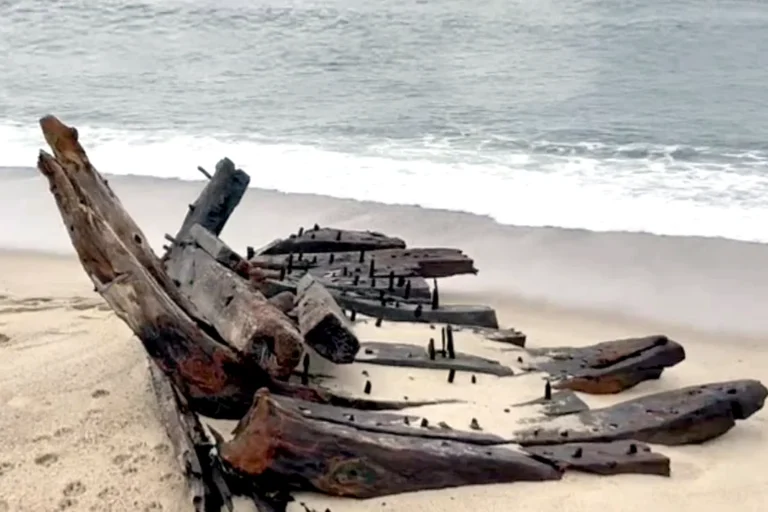
A powerful storm that swept across a United States coastline has uncovered the remains of a historic shipwreck that had remained hidden beneath layers of sand for more than 140 years, bringing renewed attention to a vessel closely connected to the area’s maritime past.
The storm-driven waves stripped away large amounts of sand from the wreck site, exposing portions of the vessel that had not been visible for years. The discovery has allowed researchers, historians and local residents to examine parts of the structure that had long been concealed.
The remains are believed to be associated with a 19th-century shipwreck, dating to a period when maritime activity along the American coast was extensive. During that era, vessels regularly faced dangerous weather conditions, with storms, powerful waves and rough seas contributing to numerous maritime accidents.
Researchers and maritime historians are now interested in the newly exposed wreckage because it could provide physical clues about the circumstances surrounding the vessel’s loss. Evidence at the site may also help investigators understand the ship’s route and the environmental conditions that existed when the sinking occurred.
Coastal storms can dramatically reshape beaches and seabeds by moving large quantities of sand. In some cases, that natural process exposes archaeological remains and other historical sites that have been buried for decades or even centuries.
The latest discovery offers researchers a limited window to document and examine the wreck before shifting sand and continued wave activity potentially conceal portions of it again.
Experts are expected to focus on recording the exposed remains and gathering information that could help establish more details about the vessel, its final voyage and the circumstances surrounding its disappearance beneath the coastline.