





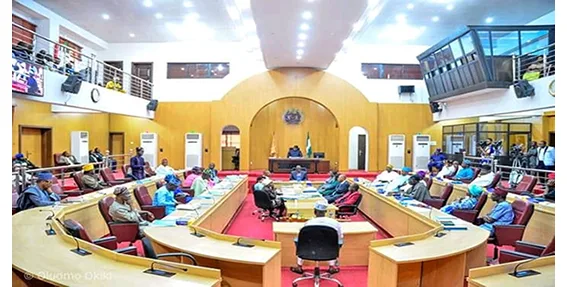
The Osun State House of Assembly has become the first state legislature to approve the proposed constitutional amendment seeking to establish state police in Nigeria.
According to The PUNCH, Osun lawmakers unanimously backed the amendment on Tuesday after receiving the State Police Services Bill from the National Assembly.
The National Assembly also clarified that the state police proposal is the only constitutional alteration bill it has transmitted to the 36 state assemblies so far.
The clarification followed reports suggesting that lawmakers had sent the entire package of proposed constitutional amendments to the states.
N’Assembly clarifies state police transmission
Clerk to the National Assembly Kamoru Ogunlana said the legislature transmitted the State Police Services Bill on September 16.
“For the avoidance of doubt, it is only this particular Constitution Alteration Bill that has so far been transmitted to the state Houses of Assembly,” he said.
Ogunlana added that other constitutional amendment bills would reach the states after both chambers of the National Assembly pass them in identical form.
He said lawmakers prioritised the state police proposal because of widespread concerns about insecurity and policing.
Osun lawmakers back state police
During deliberations, Osun lawmakers argued that state police could strengthen security at state and local government levels.
Lawrence Adeoti, Taofeek Olayiwola, Adewumi Adeyemi and Jeremiah Awoyeye were among lawmakers who supported the proposal.
They argued that states require greater capacity to respond quickly to security challenges within their territories.
Majority Leader Babajide Kofoworola later moved the motion for the Assembly to approve the amendment.
Tajudeen Adeyemi seconded the motion before lawmakers adopted it.
For the constitutional amendment to take effect nationally, it must secure the required approval from state legislatures before completing the remaining constitutional process.