




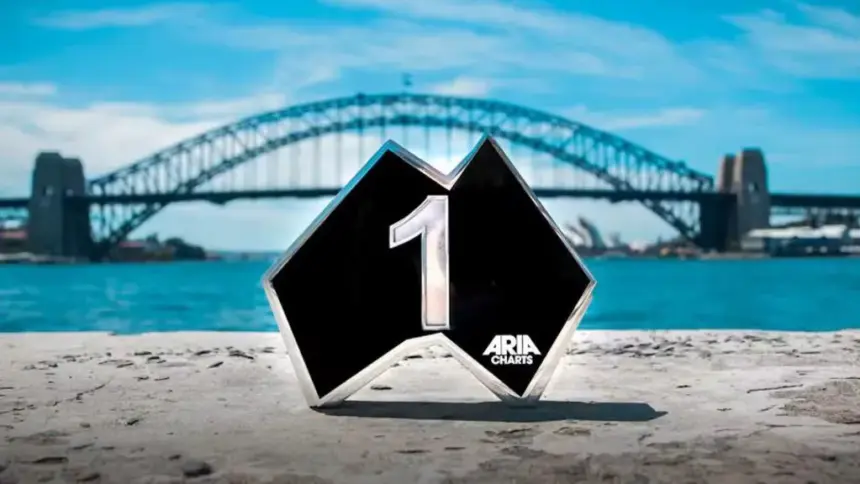
Australian music authorities have officially banned songs that are largely or wholly created by artificial intelligence from the country’s official charts, joining a growing global movement to protect human artistry in music.
The Australian Recording Industry Association announced the new rules this week, requiring all chart-eligible songs to be “substantially human made” . Annabelle Herd, chief executive of ARIA, said the charts were “not interested in promoting or celebrating the success of AI-generated music that does not contain human artistry” .
The decision came after an AI-assisted cover of Madonna’s Like A Prayer by Australian DJ Josh Fawaz topped the ARIA dance singles chart and peaked at number 2 on the country’s overall chart, sparking widespread debate about the role of AI in music.
Under the new guidelines, human songwriters must write the song, and humans must perform the lead vocal and primary instruments. AI can still be used for mastering and production tools such as drum machines and autotune, but the core creative work must come from humans. Artists will be required to declare when they have used AI, and those who fail to do so could face retrospective chart adjustments or even be asked to return awards .
While Australia moves to regulate AI music, Nigeria has become a hotbed for AI-generated music with little oversight. Earlier this year, an AI-produced album titled Choir Refix by a collective called Urban Chords went viral across streaming platforms, racking up millions of streams before anyone raised questions about its origins . The album featured AI-generated choir versions of Nigerian hits, including songs by Asake, Omah Lay, and Libianca . It reached number 43 on the Nigerian Official Top 100 Albums chart .
Similar AI-generated songs have emerged without legal challenge. An Afro-soul cover of Stromae’s 2013 hit Papaoutai, created by the AI project Chill77, climbed to number 168 on Spotify’s Global chart and amassed over 1.29 million streams . The remix used an AI voice model trained on a Congolese artist’s voice without permission . In another case, singer Fave had to release her own official version of a song after an unauthorised AI choir version featuring her vocals went viral on TikTok .
Unlike Australia and several European countries, Nigeria has yet to introduce any clear legal framework for AI-generated music .
The country’s Copyright Act of 2023 says “little or nothing” about artificial intelligence, creating what industry experts describe as a clear enforcement gap . While the law protects works created by humans, it does not clearly state whether using songs to train AI models counts as fair use or infringement, nor does it explain who owns music made mostly by machines .
Entertainment lawyer Henry Ezikeoha has warned that Nigerian musicians cannot wait for the government to act. “I’m of the view that generally the first responders to a disadvantage of technology are largely those who are affected,” he said . He noted that the Nigerian Copyright Commission has been slow to catch up with advanced nations, citing how long it took to repeal the outdated 1988 Copyright Act .
Industry analysts warn that Nigeria’s music industry is now sitting on a ticking time bomb. According to multiple sources, about 50,000 AI-generated tracks are now uploaded to streaming platforms daily . Nigerian artists, who drive an outsized share of African catalogue value on platforms like Audiomack and Boomplay, are particularly exposed to royalty dilution and brand confusion .
BNXN recently expressed his frustration with AI-generated cover art, tweeting: “I can’t stand behind an A.I cover. Especially if it’s terrible work” . Others have questioned whether some songs by established artists now feature AI-generated vocals, sparking debates about authenticity and artistic integrity .
While Australia, Sweden, and other countries are now drawing a line between human and machine-made music, Nigeria’s creators continue to operate in a legal vacuum where AI songs flourish with no repercussions. The question remains: how long before the country catches up?