




The Federal Government has unveiled a new agricultural mechanisation policy. It also announced plans to establish a major tractor assembly plant. This plant will be capable of producing between 2,000 and 4,000 units annually.
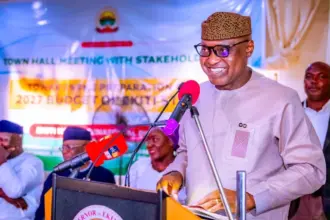
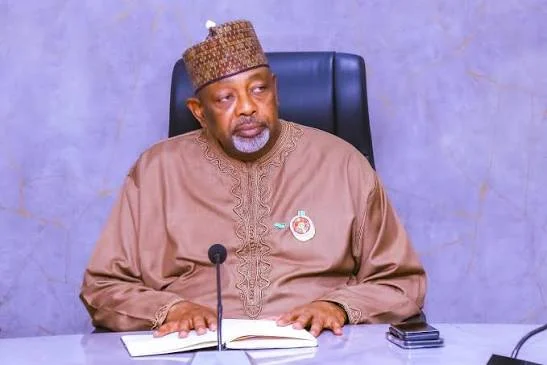
According to The Punch, Minister of Agriculture and Food Security Abubakar Kyari announced the initiative on Wednesday. He disclosed this during the High-Level National Policy Dialogue on Agricultural Mechanisation in Abuja.
Kyari said the National Agricultural Mechanisation Policy and National Agricultural Mechanisation Investment Strategy were designed to strengthen local agricultural production. Moreover, they aim to reduce Nigeria’s dependence on imported machinery.
He said the government wanted to move Nigeria “from agricultural potential to agricultural powerhouse; from mechanization deficit to mechanization leadership; and from food vulnerability to food sovereignty.”
FG pushes mechanisation beyond tractor ownership
The minister said agricultural mechanisation should not be viewed only in terms of tractors. He noted that it also covers planting, irrigation, harvesting, processing, storage, logistics, digital technology and maintenance services.
“Our ambition, therefore, must be larger than equipment ownership,” Kyari said.
“We must build a Mechanization-as-a-Service economy in which technology reaches the farmer when and where it is needed, at a cost that is commercially viable and sustainably financed.”
He said the approach would allow farmers to access machinery and other technologies without necessarily having to purchase the equipment themselves.
Government procures 2,000 tractors
Kyari also disclosed that the Federal Government had begun procuring and deploying 2,000 tractors. In addition, it is deploying more than 9,000 agricultural implements and spare parts under the Renewed Hope National Agricultural Mechanisation Programme.
He described the programme as a major intervention. However, he stressed that its success would depend on whether the equipment remained productive, properly maintained and accessible to farmers.
“It takes more than land, more than good intentions to produce efficiently, competitively and sustainably to build our food systems,” he said.
Tractor plant to boost local production
The proposed tractor assembly plant is expected to produce between 2,000 and 4,000 tractors every year.
Kyari said local assembly would help reduce reliance on imported agricultural machinery. It would also create jobs and support the growth of a sustainable mechanisation industry.
The minister also called on private investors, young people and women to participate in the emerging mechanisation economy.
He said the government’s broader goal was to develop a system in which agricultural technology could reach farmers efficiently. Furthermore, it aims to support food production, employment and investment across the sector.