





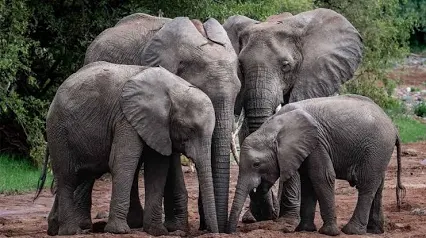
Authorities in Kenya are investigating the deaths of 15 elephants in the Amboseli ecosystem after preliminary tests indicated suspected cyanide poisoning, with the incident sparking fresh concerns over human-wildlife conflict and the impact of expanding agriculture near protected areas.
The carcass of one elephant was found lying on a dusty road, while another had been reduced to a skull after scavengers consumed most of its remains.
The animals were among those believed to have died after consuming tomatoes from nearby farms.
Investigations are underway to determine how cyanide entered an ecosystem where wildlife, livestock and farming communities exist side by side. However, farmers have rejected claims that contaminated tomatoes from their farms were responsible for the elephant deaths.
The incident has renewed debate over the challenges of balancing conservation and agricultural development around Amboseli National Park, where farming activities have expanded closer to wildlife habitats.
Kenya, which has previously suffered severe declines in elephant numbers due to poaching, has in recent years been recognised for rebuilding its elephant population to more than 36,000 through conservation efforts and stronger protection measures.
For Elvis Muchai, a tomato farmer in the Kimana area bordering Amboseli, the allegations of farmers poisoning elephants are difficult to believe. He said that after two decades of farming near the park, he had never heard of local farmers intentionally harming wildlife.
Muchai said communities around Amboseli have lived alongside elephants for years despite frequent crop destruction when the animals cross the park’s electric fence and raid farms, especially during dry seasons.
“We are used to the animals eating from our farms,” he said.
The Kenya Wildlife Service announced last month that 15 elephants had died within the Amboseli ecosystem over a period of one month.
Preliminary laboratory tests detected cyanide, while postmortem examinations found tomatoes in the elephants’ stomachs.
Dr Isaac Lekolool, head of veterinary services at Kenya’s wildlife agency, said the elephants showed signs of “paralysis and difficulty breathing” before their deaths. He said initial findings pointed to cyanide poisoning, although further laboratory tests are being conducted to determine the concentration of the chemical.
“We are yet to find out where this cyanide came from,” Lekolool said, adding that the elephants had also consumed watermelons. He urged caution in the handling and use of pesticides by farmers.
Kimana, which borders Amboseli National Park, is one of Kenya’s most productive agricultural regions, producing tomatoes, onions and French beans that are transported to markets, including those in Nairobi.
Lekolool said samples tested for toxic substances were collected from the elephants’ stomach contents, while blood analysis was still ongoing. He also dismissed suggestions that cyanide may have entered the park through illegal mining activities, noting that the chemical is regulated by the government for mining purposes.
The deaths come amid growing concerns over human-elephant conflict in Kenya. According to the country’s National Elephant Plan, conflict between communities and elephants is the second-largest cause of elephant deaths after poaching.
The plan records that at least 1,160 elephants died between 2000 and 2020 in incidents involving self-defence or retaliatory killings as communities attempted to protect crops, property and lives.
However, Duncan Juma, communications director at the Kenya Wildlife Service, rejected the possibility that human-wildlife conflict was responsible for the recent deaths, saying “the community loves these animals.”
The International Fund for Animal Welfare (IFAW) said the suspected cyanide poisoning incident highlights the need to address the causes of conflict between people and wildlife.
“As people and elephants increasingly share space, protecting wildlife and safeguarding communities’ livelihoods must go hand in hand,” IFAW wrote in a statement.
IFAW East Africa Director Ben Wandago called for the reported cyanide poisoning to be “urgently and thoroughly investigated” and urged the implementation of measures that allow communities living near the park to coexist safely with wildlife.
“This tragedy also underscores the urgent need for the strict control and responsible handling of highly toxic substances to prevent them from entering the natural environment,” he said.
Farmers, however, remain doubtful that cyanide could have originated from agricultural products used in the area.
Muchai said he had never encountered cyanide among pesticides or chemicals sold to farmers and maintained that products available in the market are regulated by the Kenyan government.
“The chemical they are talking about, we’ve never seen it or heard of it here,” he said.
He added that elephants destroyed about half an acre of his tomato farm during the last season, causing losses of nearly $3,900.
“We have lived with these animals for years. They eat our crops, and many of us have never received compensation,” he said.
Another farmer, Rymondy Mrosso, questioned whether pesticides used by farmers could have caused the deaths, arguing that other animals feeding in the same areas were not affected.
“We have goats, cows and other wildlife such as gazelles that also feed in these areas,” he said. “If the crops were poisoned, why were only the elephants affected?”