



Iran says it is close to reaching a Hormuz deal with Oman over a new maritime route, hours after the United States suspended planned attacks to create room for diplomacy.
According to AFP, Iranian officials said negotiations were progressing over a route through the Strait of Hormuz that would respect the territorial rights and security interests of both Iran and Oman.
The development followed an announcement by US President Donald Trump that Washington and Israel would hold off on fresh attacks against Iran while diplomatic efforts continued.
Trump said Iran and other Middle Eastern countries had requested more time to complete an agreement. He added that the broad conditions required for a possible deal were already in place.
The US president said he cancelled the planned attack to protect regional stability and give Iran an opportunity to reach an agreement quickly.
However, Iranian media denied that Tehran had asked Trump to cancel the strikes. Iran has also said it is not currently engaged in direct negotiations with the United States.
Iran and Oman seek compromise route
Iranian Foreign Ministry spokesman Esmaeil Baghaei said Tehran and Muscat were working towards an acceptable maritime route through the strategic waterway.
The proposed passage would reportedly avoid both the existing northern and southern routes while recognising the sovereign rights of both countries.
“We are now going to reach an understanding on a route acceptable to both sides,” Baghaei said.
He explained that the proposed arrangement would protect Iran’s national interests and security while taking Oman’s territorial rights into account.
However, Baghaei warned that an agreement on a new route would not necessarily mean the complete reopening of the Strait of Hormuz.
Iran has insisted that it must retain significant control over vessels passing through the waterway. The United States, however, wants all shipping lanes reopened without restrictions or compulsory charges.
Before the conflict, commercial vessels could pass freely through the strait. Iran later restricted navigation and demanded greater authority over shipping routes and payments.
The disagreement has become one of the greatest obstacles to efforts aimed at ending the conflict.
US pauses attack plan for diplomacy
Trump announced the suspension of the proposed military operation after several diplomatic engagements involving Middle Eastern leaders.
The US president reportedly spoke with Saudi Crown Prince Mohammed bin Salman as regional governments pushed for negotiations rather than another round of attacks.
Trump said any final agreement must guarantee the immediate and complete reopening of the Strait of Hormuz.
He also insisted that the agreement must address concerns over Iran’s nuclear programme.
Western countries have repeatedly accused Tehran of seeking the capacity to develop nuclear weapons. Iran maintains that its programme exists entirely for peaceful and civilian purposes.
Trump said Washington remained prepared to act if negotiations failed, but he expressed hope that both sides could reach an agreement rapidly.
The decision reduced immediate fears of another major escalation after the US and Israel reportedly considered attacks on Iranian military and energy infrastructure.
Embassies and military facilities across the region had been placed on alert amid concerns that Iran could retaliate against countries hosting American forces.
Efforts to revive earlier memorandum
Iranian lawmaker Hassan Ghashghavi said mediators were attempting to revive the Islamabad memorandum of understanding reached in June.
Ghashghavi, who speaks for the Iranian parliament’s national security commission, said the earlier memorandum was not designed as a final peace agreement.
Instead, it was intended to create a foundation for broader negotiations involving regional security, Iran’s nuclear programme and navigation through the Strait of Hormuz.
He said the waterway had become the central issue facing negotiators.
“They know that the main issue and, in fact, the key to the matter right now is the issue of the Strait of Hormuz,” Ghashghavi said.
He confirmed that the parties were exchanging proposals but did not provide details about the concessions under consideration.
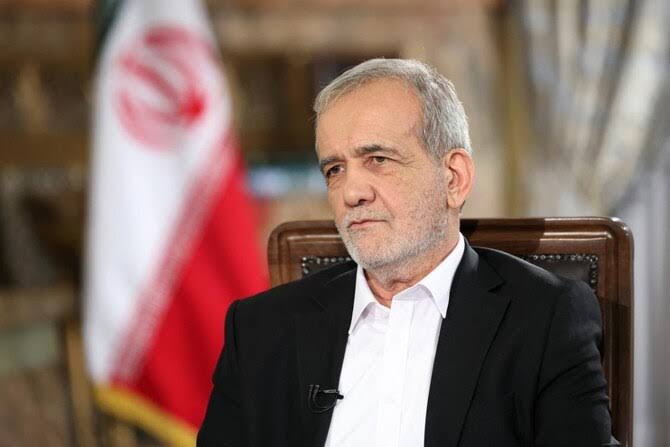
Iranian President Masoud Pezeshkian also urged negotiators to ensure that every party honoured any agreement reached.
“We must strive to compel the enemy to remain committed to what it has signed,” Pezeshkian said in a post on X.
Hormuz dispute disrupts global trade
The Strait of Hormuz connects the Persian Gulf to the Gulf of Oman and the wider Arabian Sea.
Before the conflict, about one-fifth of globally traded oil and liquefied natural gas passed through the narrow waterway.
Restrictions and military activity around the strait have disrupted commercial shipping and increased concern over global energy supplies.
Shipping companies have reduced movements through the area because of attacks, military blockades and uncertainty over which routes remain safe.
Iran has insisted that vessels must follow a route closer to its coastline. Tehran also wants to preserve the right to regulate passage and collect fees.
The United States rejects that position and says commercial vessels must receive unrestricted access to internationally recognised shipping lanes.
The dispute contributed to the resumption of military attacks last month after earlier diplomatic arrangements collapsed.
A lasting agreement would require both countries to settle questions involving navigation, security oversight and possible payments by shipping companies.
Uncertainty surrounds possible Hormuz deal
Despite the apparent progress, significant differences remain between Iran and the United States.
Iran’s discussions with Oman focus mainly on creating a temporary route that both coastal countries can accept.
Washington is demanding a complete reopening of the strait and an agreement addressing Iran’s nuclear programme.
Iran has not publicly accepted those wider conditions. Its officials have also rejected suggestions that negotiations with Oman amount to direct peace talks with the United States.
It therefore remains unclear whether the proposed maritime arrangement can develop into a wider agreement ending the conflict.
Negotiators must also determine who will monitor the route, protect commercial vessels and respond to alleged violations.
Previous agreements have repeatedly collapsed after disagreements over implementation and the order in which each side should fulfil its commitments.
Iran may demand an end to US and Israeli attacks before fully reopening the waterway. Washington could insist that unrestricted navigation begin before lifting military or economic pressure.
For now, the suspension of planned strikes has created a limited diplomatic opening.
A successful Hormuz deal could restore commercial shipping, reduce pressure on global energy markets and create a path towards broader negotiations.
However, the outcome will depend on whether Iran, Oman, the United States and other regional parties can convert the current exchange of proposals into an enforceable agreement.