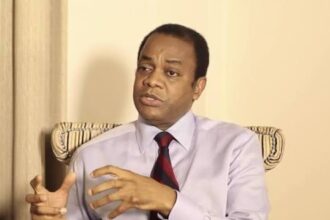




Peter Obi has renewed his pledge to run a one-term presidency if elected in 2027, insisting that a focused leader can transform Nigeria within four years.
According to Vanguard News, the former Anambra State governor made the commitment during an extended conversation at an airport, where he addressed security, the economy, corruption, electoral reform and Nigeria’s rising debt.
Obi said his decision went beyond personal ambition and reflected an agreement already reached in the interest of national unity. He offered to sign further undertakings, including a legally binding affidavit before a competent court, to assure Nigerians that he would not seek another term.
“Yes, you can do a lot in four years. You can change Nigeria in four years. I am committed to serving a single term of four years,” he said.
Obi argued that broken political promises had deepened public distrust and weakened confidence in Nigeria’s leaders. He said honouring the one-term agreement would show that a leader’s word could still carry meaning.
“This is bigger than Peter Obi. It is about national healing and unity,” he said. “It would be a betrayal of trust to seek the support of Nigerians based on such an understanding and later renege on it.”
One-term presidency to focus on security
Outlining his priorities, Obi described the protection of lives and property as the first responsibility of government. He said Nigeria could not defeat insecurity through military force alone.
According to him, the country needs stronger intelligence gathering, improved coordination among security agencies and modern surveillance technology. He also called for better welfare for security personnel and greater attention to poverty, unemployment and hopelessness.
Obi explained that these social problems often create conditions that allow criminal groups to recruit vulnerable people.
He said his administration would secure communities while tackling the economic and social pressures behind banditry, terrorism and other crimes.
The former governor added that security would unlock the agricultural potential of Northern Nigeria and allow the region to become a major food production centre.
Obi pushes production-led economy
On the economy, Obi acknowledged the need for reforms but argued that governments must plan and implement them with compassion.
He said Nigeria must move away from excessive consumption and build an economy driven by agriculture, manufacturing and small businesses. His proposed approach would also reduce waste, block revenue leakages and lower the cost of governance.
Obi used Bangladesh to illustrate Nigeria’s poor use of its resources. He noted that the Asian country has a much smaller land mass and higher population density but produces far more rice.
He said Northern Nigeria possesses enough fertile land to become the food basket of Africa if the government improves security, irrigation, rural roads, financing and access to markets.
“If we secure the North, invest in modern agriculture, expand irrigation, improve rural infrastructure and guarantee farmers access to finance and markets, there is no reason Northern Nigeria cannot become the food basket of Africa,” he said.
Obi argued that agriculture should become an export-driven industry capable of generating more foreign exchange than crude oil.
“Oil is a diminishing asset, but productive land, properly managed, can create wealth for generations,” he added.
Obi urges Nigerians to defend their votes
Speaking about the 2027 election, Obi acknowledged the frustration of Nigerians who no longer believe that voting can produce meaningful change.
However, he urged citizens not to surrender their democratic rights. He described the next election as a defining contest between Nigerians seeking a better future and leaders who had failed to move the country forward.
Obi encouraged voters to participate in the election, protect their votes and take greater ownership of the democratic process.
He also called for strict compliance with electoral laws and greater use of reliable technology. According to him, electoral institutions must operate independently and ensure that every lawful vote counts.
Obi criticised the unresolved controversy surrounding electronic transmission during the previous general election. He said officials should not use an unexplained technical problem to frustrate the will of voters.
“Democracy belongs to the people, and the people’s mandate must always be respected. Every legitimate vote must count,” he said.
Leadership integrity key to fighting corruption
On corruption, Obi said leadership integrity remained the strongest foundation for accountability in government.
He raised concerns about fictitious agencies, opaque spending systems and questionable practices that make it difficult for citizens to track public funds.
According to him, corruption reduces significantly when the president or governor refuses to participate in it. Such leadership, he said, would set the tone for public officials and strengthen transparency.
Obi also called for open procurement processes, responsible spending and stronger systems for monitoring government transactions.
“When a president or governor is personally not corrupt, corruption in that government is already reduced significantly,” he said.
Obi questions Nigeria’s rising debt
The former governor also expressed concern about Nigeria’s rising debt and the use of borrowed funds.
He said borrowing was not automatically harmful because many successful economies use debt to finance development. However, he warned that loans used for consumption would leave future generations with heavy obligations but few productive assets.
Obi said the government should direct borrowed money towards education, healthcare, infrastructure, agriculture, manufacturing and technology.
“The issue is not borrowing itself. Every serious economy borrows. The question is what you borrow for,” he said.
He described education and healthcare as investments in human capital rather than expenses, adding that no country could achieve lasting progress without a healthy and skilled population.
Obi said Nigeria could also attract more international investment through credible leadership, stable institutions and consistent economic policies.
Despite criticism and political pressure, he maintained that he remained focused on helping Nigeria work.
“Leadership is not about avoiding criticism,” Obi said. “When you challenge a system, there will always be opposition.”
He urged Nigerians to remain hopeful, arguing that the country’s greatest strength remained its people.
“What has held us back is leadership. If we get leadership right, every other challenge becomes easier to address,” he said. “A new Nigeria is possible.”