



The US tariff on Nigeria has risen to 12.5 per cent after Washington accused the country of failing to effectively prohibit imports produced through forced labour.
Nigeria joins several economies affected by the latest trade action announced by the Office of the United States Trade Representative. The tariffs cover 60 major trading partners investigated under Section 301 of the Trade Act of 1974.
The USTR said the affected economies had failed to impose or properly enforce restrictions on goods linked to forced labour. Countries that adopted stronger measures received a lower tariff rate of 10 per cent.
India, Indonesia, Malaysia, Mexico and the United Kingdom are among those facing the lower rate. Nigeria and other economies without recognised commitments will pay 12.5 per cent on affected products.
Why the US tariff on Nigeria was imposed
The USTR launched investigations into the trade practices of 60 economies in May 2026. It later received more than 1,600 written submissions and heard evidence from over 100 witnesses.
Officials also held discussions with more than 45 governments before reaching their decisions. The agency said the consultations examined whether each country had established effective forced labour import restrictions.
A Federal Register notice stated that Nigerian products would face the 12.5 per cent duty, except for goods covered by specific exemptions.
“Based on the findings in the investigation of Nigeria, considering the public comments, testimony, and the advice of the Section 301 Committee, the Trade Representative has determined to impose 12.5 percent tariffs on products of Nigeria,” the notice said.
The USTR added that the duty and its exemptions were designed to pressure affected governments to change the trade practices identified during the investigation.
Countries rewarded for labour restrictions
The United States placed a 10 per cent duty on economies that already operate forced labour import bans or have promised to introduce them.
The lower rate also applies to countries with partial systems that block certain goods linked to forced labour.
Argentina, Bangladesh, Cambodia, Canada, Ecuador, El Salvador, Guatemala and Honduras appear on that list. Others include India, Indonesia, Jordan, Malaysia, Mexico, Pakistan, Sri Lanka, Trinidad and Tobago, and the United Kingdom.
Some products from the European Union, Japan, South Korea, Switzerland and Taiwan will face duties ranging between 10 and 12.5 per cent. The exact rate will depend on existing tariffs and listed exemptions.
“All other investigated economies” will attract the higher 12.5 per cent rate, according to the trade office.
Trump administration defends tariff action
US Trade Representative Jamieson Greer said the measure would encourage governments to remove forced labour from international supply chains.
“President Trump recognises that decades of moral suasion have not eradicated forced labour from global supply chains,” Greer said.
He noted that the United States had operated a forced labour import ban for almost 100 years. Greer argued that major trading partners should adopt similar restrictions.
“The United States has had a forced labour import ban for nearly a century. It’s well past time for our trading partners to do the same,” he added.
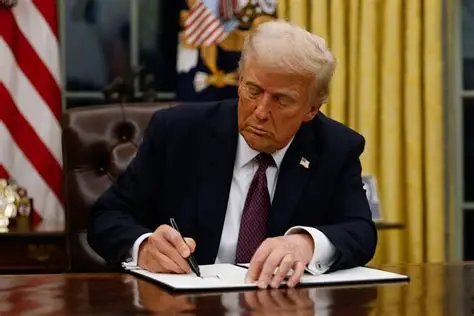
The tariff forms part of President Donald Trump’s broader effort to use import duties as a tool for changing foreign trade policies.
The administration introduced the latest measure after the US Supreme Court blocked an earlier tariff plan imposed under emergency economic powers.
Following that ruling, Trump turned to other provisions of American trade law. He later invoked Section 122 of the Trade Act to introduce a temporary universal tariff.
Some Nigerian products exempted
The USTR said the new duty would not apply to every Nigerian product entering the United States.
Exemptions cover some raw materials that could cause domestic shortages if tariffs limited their supply. Washington also excluded selected goods that could create wider economic disruption.
Products unavailable in sufficient quantities within the United States may also receive exemptions. The same applies where suitable alternative suppliers do not exist.
Officials granted further exclusions where they concluded that tariffs would not help remove the practices identified during the investigation.
The US tariff on Nigeria could raise the cost of some Nigerian goods entering the American market. It may also place pressure on Abuja to strengthen its policies against forced labour imports.
The Nigerian government had yet to announce its response to the decision at the time of the USTR notice.