





The United States Supreme Court has ruled that states can continue counting mail-in ballots received after election day, dismissing a legal challenge backed by the Trump administration that sought to overturn Mississippi’s ballot receipt deadline.
In a narrow 5-4 decision, the court upheld a Mississippi law allowing election officials to count postal ballots that were postmarked on or before election day but arrived within five days after the vote. The ruling preserves a practice adopted by more than a dozen states, many of which are expected to play a decisive role in determining control of Congress following the November midterm elections.
Most states that permit the counting of late-arriving mail ballots are Democratic-leaning, although several Republican-led states also provide voters with a post-election grace period for ballot delivery.
Justice Amy Coney Barrett authored the majority opinion, which was joined by Chief Justice John Roberts and the court’s three liberal justices. In her ruling, Barrett said the decision was consistent with federal election law, which designates the “Tuesday next after the 1st Monday in November” as the official election day.
“The election-day statutes say nothing about ballot receipt, and we cannot add to the words Congress chose,” she wrote.
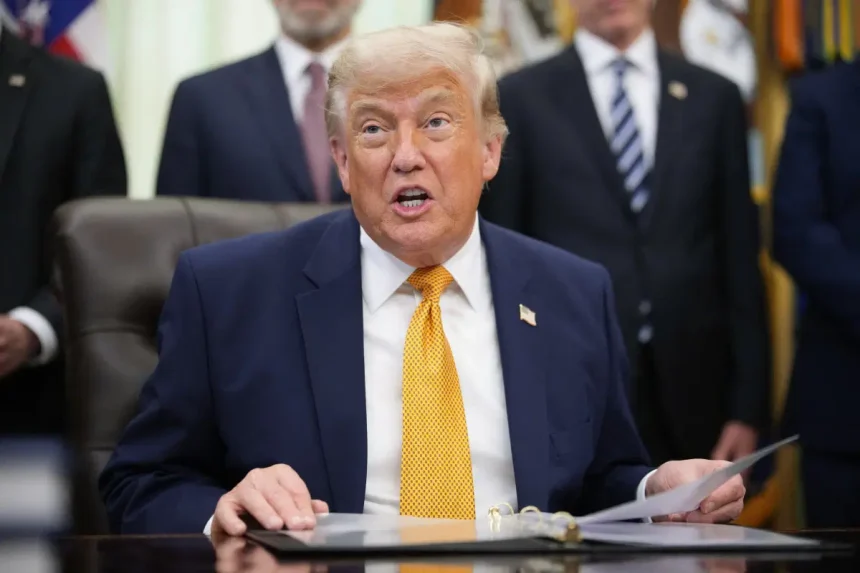
The judgment represents a major legal setback for President Donald Trump, who has repeatedly claimed, without evidence, that mail-in voting is susceptible to widespread fraud and has maintained that the system cost him victory in the 2020 presidential election against Joe Biden.
The legal dispute reached the nation’s highest court in March when Trump’s lawyer argued in support of a lawsuit led by the Republican National Committee challenging Mississippi’s deadline for receiving mail ballots.
At the heart of the case was an 1845 federal law establishing election day as the first Tuesday after the first Monday in November. Republican challengers contended that the statute requires ballots to be both postmarked and received by election day to be considered valid.
“Election-day receipt promotes election integrity and voter confidence as much today as it did when Congress passed that law,” the Trump administration told the Supreme Court in a legal brief.