


Two American lawmakers have introduced a bill in the United States Congress proposing sanctions against former Kano State Governor Rabiu Kwankwaso over alleged violations of religious freedom.
The proposed legislation names Mr Kwankwaso — a former senator, defence minister and presidential candidate — among individuals allegedly linked to systemic religious “persecution of Christians that has persisted” in Nigeria.
The claim advances a narrative promoted by the bill’s sponsors, although it has been disputed by several local and international observers.
The bill calls on the US Secretary of State to impose a visa ban on Mr Kwankwaso, freeze any assets under US jurisdiction, and apply other targeted sanctions.
Titled the “Nigeria Religious Freedom and Accountability Act of 2026,” the legislation also seeks sanctions against the Miyetti Allah Cattle Breeders Association of Nigeria (MACBAN), Miyetti Allah Kautal Hore, and Fulani-ethnic nomad militias operating in Nigeria.
The measure was sponsored by Republican lawmakers Riley Moore and Chris Smith, who have repeatedly advanced claims of Christian genocide in Nigeria.
The sponsors said Mr Kwankwaso and the named organisations should be investigated for allegedly supporting Fulani-ethnic militias involved in violence and be held accountable if found culpable.
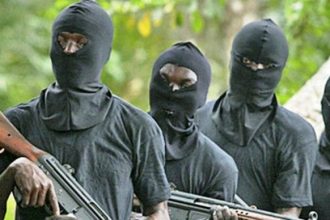
According to the bill, Fulani militant groups, alongside other extremist organisations in Nigeria, have carried out coordinated attacks on civilian communities, particularly in the Middle Belt.
It stated that the repeated violence “meet the statutory definition of terrorist activity under section 212(a)(3) of the Immigration and Nationality Act (8 U.S.C. 1182(a)(3)).”
“These militias have conducted attacks involving targeted killings, hostage-taking, hijackings, armed assaults, massacres of civilians, destruction of property, and forced displacement of local population,” the bill said.
The legislation recommends sanctions under the Global Magnitsky Act, which empowers the US government to penalise foreign individuals and entities accused of human rights violations or corruption.
For the bill to become law, it must pass both chambers of Congress and be signed by President Donald Trump.
It remains unclear why Mr Kwankwaso was specifically named in the legislation. He left office as Kano governor in 2019 and has not held a major public position since.
The bill also cites figures from the International Society for Civil Liberties and Rule of Law (Intersociety), alleging that “between 50,000 and 125,000 Christians have been martyred between 2009 and 2025, with more than 19,000 Christian churches attacked or destroyed.”
However, several investigations have questioned the reliability of the Intersociety data, which US officials, including Mr Moore and Mr Smith, have referenced since 2025.
A BBC investigation last November reported that the methodology used to generate the figures was unclear.
The organisation did not present detailed evidence or references to substantiate the numbers and failed to provide an itemised breakdown of sources. Older reports were reportedly incorporated into updated totals without clarifying how fatalities were categorised by religion, region, or perpetrators.
The BBC said that when asked to supply verifiable documentation, the organisation either declined or offered general summaries.
Earlier this year, a New York Times investigation found that the organisation is owned and operated by Emeka Umeagbalasi, a Nigerian who acknowledged he did not independently verify the data.
The US bill further points to the application of blasphemy laws as evidence of religious intolerance in Nigeria.
It referenced the 2022 killing of Deborah Yakubu, a student of Shagari College of Education in Sokoto, who was stoned to death by fellow students over alleged blasphemous remarks. It also cited the case of Rhoda Jatau in Bauchi, who was detained for 18 months after criticising Deborah’s killing.
The legislation mentioned Yahaya Sharif-Amin, a Sufi Muslim musician from Kano, who was sentenced to death by hanging by a Sharia court in 2020 for sharing song lyrics deemed blasphemous on WhatsApp.
“The Nigerian Government routinely denies that religious persecution exists and has failed to adequately intervene, including on early warning notifications of upcoming attacks, including the October 14, 2025, Plateau State massacre,” part of the bill read.
The proposal also seeks to designate Fulani ethnic militias as foreign terrorist organisations.
It would require the Secretary of State to submit annual reports on Christian persecution in Nigeria and assess whether US assistance to the country contributes to such persecution.
The bill further states that the Nigerian government “should thoroughly investigate instances of penalties or imprisonment under blasphemy laws or Sharia law and work to end these practices and repeal such laws.”
It declares that religious violence and militant activities in Nigeria threaten US national security and foreign policy interests.
According to the bill, the situation “destabilises a strategically important region, jeopardises religious freedom rights, and exacerbates the threat environment facing West Africa.”
Mr Moore said the legislation would “build upon the momentum of President Trump designating Nigeria as a Country of Particular Concern and the recent US-Nigeria security framework agreement.”
“The US is a Christian nation. As such, we must stand with persecuted Christians around the world,” he wrote.
Last year, Mr Moore repeatedly advanced the Christian genocide narrative and criticised Nigerian authorities for allegedly failing to protect Christians.
His advocacy preceded President Trump’s designation of Nigeria as a Country of Particular Concern (CPC), a move some observers believe his lobbying may have influenced.
Despite contrary assessments by the Nigerian government and various local and international organisations — which attribute insecurity in Nigeria to multiple complex factors rather than genocide — Mr Moore maintained his position.
In September, Mr Moore wrote to the Secretary of State urging the US to deploy “every diplomatic tool” to halt what he described as the “slaughter of Christians.”
He suggested measures including designating Nigeria as a CPC and suspending arms sales and technical support.
“Muslim extremist groups such as ISIS-West Africa, Ansaru, and Boko Haram are major perpetrators. Just last week, Boko Haram ravaged Kirawa, Nigeria, displacing thousands. But just as concerning are reports that corrupt cells of the Nigerian government may be complicit,” he stated in his letter.
Mr Smith had earlier introduced separate legislation seeking sanctions against MACBAN and Miyetti Allah Kautal Hore.
Recall that some Nigerians have accused both organisations of involvement in attacks by armed herders on rural communities. The groups have denied the allegations, maintaining that their members — largely cattle herders — have themselves been victims of violence in several states.
During a recent visit to Nigeria, Mr Moore described his meeting with National Security Adviser Nuhu Ribadu as “productive and positive.”
US-Nigeria military cooperation has since intensified. Recently, the US military announced that a small contingent of American personnel had been deployed to Nigeria.
Nigeria’s Defence Headquarters confirmed the development, stating that engagements with the US are conducted within established bilateral agreements and in “full respect of Nigeria’s sovereignty.”
Nigeria continues to grapple with multiple security challenges, including Boko Haram insurgency in the North-east, banditry in the North-west, herder-farmer clashes in the North-central, and separatist violence in the South-east.